Our Blog
World Rabies Day: Why Every Dog and Cat Needs a Rabies Vaccine
Rabies is rare, but it is not something we can afford to ignore.
Every year on September 28, World Rabies Day reminds us that rabies remains one of the world’s most serious and preventable infectious diseases. For pet owners, one of the simplest and most important ways to help prevent rabies is to keep your dog’s or cat’s rabies vaccination current. And yes, that includes indoor cats.
Rabies vaccination protects your pet, your family, veterinary professionals, and the broader community. It can also make a major difference in what happens if your pet is ever exposed to rabies or involved in a bite incident.
What Is Rabies?
Rabies is a viral disease that attacks the nervous system of mammals, including pets, wildlife, and people. Once clinical signs develop, rabies is essentially fatal. The good news is that rabies is preventable, and vaccination is one of our most effective tools for protecting both pets and people.
In Illinois, rabies continues to circulate in wildlife. Bats are an important wildlife reservoir for rabies in the state, which means even pets with no obvious history of encountering wildlife can potentially be exposed.
How Can a Dog or Cat Be Exposed?
Rabies is most commonly transmitted when the saliva of an infected animal enters the body, usually through a bite. It can also be transmitted when saliva contacts an open wound or mucous membranes.
For pets, potential exposures include bites from rabid wildlife, fights with raccoons, skunks, foxes, bats, or other mammals, and bites from unfamiliar dogs or cats. Outside of being bitten by a bat, concern also exists if a bat is caught or mouthed by a pet.
One of the challenges with rabies is that you may not always know an exposure occurred. Small wounds can be difficult to find under fur, and a bat encounter may not leave an obvious bite mark. That is one reason keeping your pet vaccinated is so important.
‘But My Cat Is Strictly Indoors.’
We hear this frequently, and we understand why an indoor lifestyle feels like protection from rabies. An indoor cat certainly has a lower risk of exposure than a cat who regularly goes outside. However, lower risk does not mean zero risk, and indoor cats have some specific circumstances that make rabies vaccination important.
Bats Can Get Inside Your Home
For indoor cats, bats are one of the most important potential sources of rabies exposure. A bat can occasionally enter a home through a chimney, attic, roof opening, or another small access point. Cats are natural hunters, and their instinct may be to chase, catch, or play with a bat that gets inside.
You may never find a visible bite wound on your cat. If your cat catches or mouths a bat, that can potentially be a rabies exposure even if your cat appears completely normal afterward.
If a bat is found inside your home where your cat had access to it, contact your veterinarian and local animal control or public health authorities for guidance. Do not assume that your cat could not have been exposed simply because you do not see a bite.
Indoor Cats Can Escape
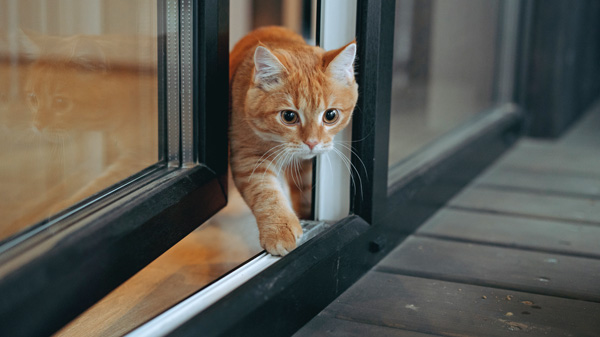
Even the most dedicated indoor cat can occasionally slip through an open door, escape during a move, get outside during home repairs, or become separated from the family. Once outside, a cat may encounter wildlife or another animal before you have an opportunity to intervene.
Indoor cats may also need to leave home for veterinary visits, boarding, grooming, travel, or emergency care. Having a current rabies vaccination helps ensure that your cat is protected if an unexpected situation occurs.
Most importantly, vaccination can significantly affect how public health officials manage your cat if a potential rabies exposure does occur. A vaccinated cat and an unvaccinated cat can face very different quarantine requirements following an exposure.
Rabies Is a Public Health Issue
Rabies is not just a disease we worry about in pets. It is a zoonotic disease, which means it can be transmitted from animals to people. Human rabies is rare in the United States, but once clinical disease develops, it is almost always fatal.
Illinois reported a fatal human rabies case in 2021, the state’s first human rabies death since 1954. The person had been bitten by a rabid bat and did not receive appropriate post-exposure treatment.
Vaccinated pets provide an important layer of protection between rabies circulating in wildlife and the people who live with them. When we vaccinate your pet, we are protecting more than one animal. We are also helping protect your household and our community.
What Happens If Your Pet Bites Someone?
A bite does not automatically mean that your pet has rabies. However, because rabies is so serious, public health authorities take animal bites very seriously. A dog or cat that bites a person may need to undergo a 10-day rabies observation period.
The purpose of this observation is not to punish your pet. It is to determine whether they could have been infectious with rabies at the time of the bite. If the pet remains healthy throughout the observation period, it was not shedding rabies virus in its saliva at the time of the bite.
Vaccination status can affect where and how that observation takes place. In Cook County, a dog or cat that was current on its rabies vaccination at the time of the bite may complete the 10-day observation at home, with veterinary examinations on the first and tenth days. A pet that was not current on its rabies vaccination must be impounded in a facility with a veterinarian on site daily, according to Cook County guidance.
This means that if your vaccinated pet unexpectedly bites someone, being current on rabies vaccination may allow your pet to remain safely at home during the observation period rather than spending 10 days in a supervised facility.
What Happens If Your Pet Is Exposed to Rabies?
This is different from a situation in which your pet bites a person. If your dog or cat is bitten by a rabid or potentially rabid animal, or has a significant exposure involving a bat, animal control and public health officials will determine what happens next.
Vaccination status is extremely important in this situation.
If Your Pet Is Currently Vaccinated
For a vaccinated dog or cat exposed to a rabid or potentially rabid animal, Illinois guidance calls for a rabies booster and 45 days of confinement or observation, provided the pet meets the applicable vaccination criteria. The location of confinement is determined by animal control.
In some situations, appropriately vaccinated pets may be allowed to complete this observation period at home with close monitoring. Your veterinarian and local authorities will provide specific instructions based on the circumstances of the exposure.
If Your Pet Is Unvaccinated or Overdue
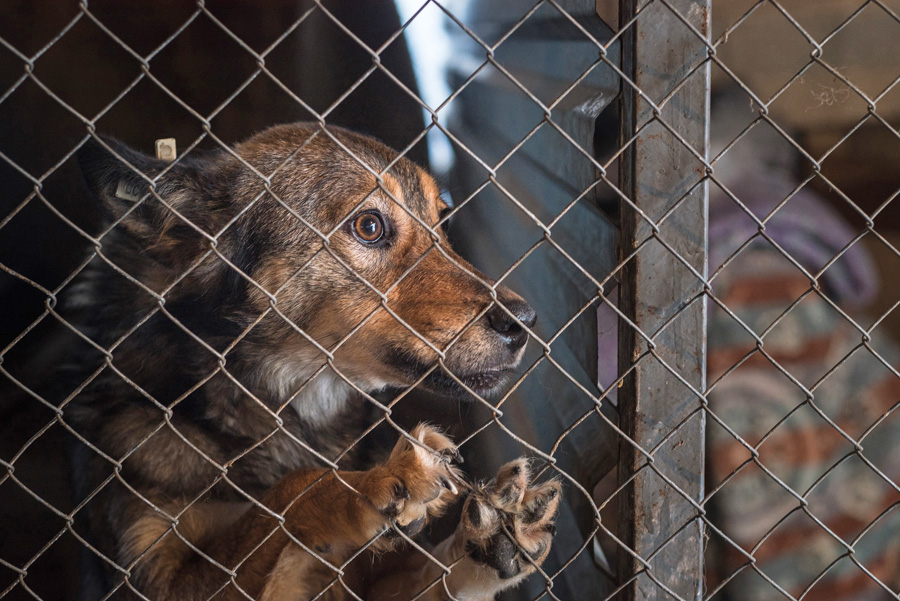
The situation becomes much more serious for an unvaccinated or overdue pet. For an unvaccinated or overdue dog or cat exposed to a rabid or potentially rabid animal, Illinois guidance states that immediate humane euthanasia is preferred. If the owner declines euthanasia, the pet must undergo a six-month quarantine, along with vaccination and additional confinement requirements during the quarantine period.
This is an incredibly difficult situation for any pet owner. It is also one of the strongest reasons we recommend keeping your pet’s rabies vaccination current. A routine vaccination can make the difference between a manageable 45-day monitoring period and a six-month quarantine, or in some circumstances, a recommendation for euthanasia.
Why Is Quarantine Necessary?
It is important to understand that quarantine does not mean your pet is being assumed to have rabies. It is necessary because rabies can have an incubation period during which an animal can be infected without showing signs of illness.
During quarantine, authorities monitor the pet for signs of rabies while preventing potential contact with other animals or people. The goal is to protect your pet, your family, and the community while giving public health officials time to appropriately manage the potential exposure.
The exact quarantine requirements depend on the type of exposure, your pet’s vaccination status, whether the animal involved in the exposure can be tested, and other circumstances. Animal control and public health authorities determine the appropriate protocol for each individual case.
Rabies Vaccination Requirements in Cook County
Rabies vaccination is not simply something we recommend as veterinarians. It is also required by law.
Under Cook County’s rabies requirements, owners of dogs and cats four months of age and older must have their pets vaccinated against rabies by a licensed veterinarian at intervals approved by the Illinois Department of Agriculture. Cook County also issues rabies tags with vaccinations. These tags provide proof of vaccination and identification and should be attached to the pet’s collar or harness when the pet is off the owner’s property.
What If My Pet Cannot Receive a Rabies Vaccine?
There are situations in which a veterinarian may determine that vaccination could pose a significant health risk to an individual pet. Cook County allows rabies vaccination exemptions on a case-by-case basis when vaccination may jeopardize a pet’s health.
A medical exemption does not mean a pet is considered vaccinated for every legal or public health purpose. Cook County guidance states that an exempt pet is still considered unvaccinated if it bites someone or is exposed to rabies.
If you believe your pet may need a rabies vaccination exemption, talk with your veterinarian about your pet’s individual risks, the potential benefits and risks of vaccination, and the documentation required.
The Easiest Rabies Prevention Plan? Keep the Vaccine Current.
We know that vaccines can sometimes feel like just another item on your pet’s wellness checklist. Rabies vaccination, however, is especially important because it protects against a disease that is almost always fatal once symptoms develop. It also protects your family and community and can dramatically change the quarantine options available to your pet after an exposure.
For our feline patients, being an indoor cat does not mean being completely protected from rabies. An unexpected bat in the home is enough to create a potential exposure, and an escaped indoor cat can encounter wildlife before making it safely back home.
This World Rabies Day, take a moment to check your pet’s rabies certificate. Is your dog’s or cat’s rabies vaccination current?
If you’re not sure, give our veterinary team a call. We are happy to review your pet’s records, answer questions about their vaccine schedule, and make sure they are protected.
One vaccine can make a very big difference.
— Jeanette Barragan, DVM
Why Buy Your Pet’s Medications, Prescription Food, and Prevention Directly From Us?
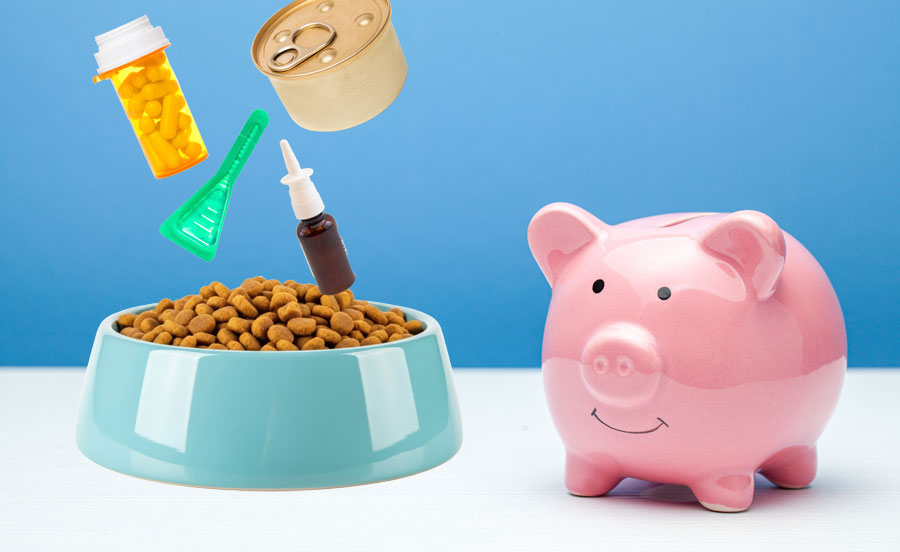
If you’ve ever stood in the checkout line wondering whether it’s cheaper to order your pet’s heartworm prevention or prescription diet online, you’re not alone. It’s a fair question and one we’re happy to answer honestly. Here’s why we think buying directly from Medical District Veterinary Clinic is almost always the better choice for you and your pet.
We Check Our Prices — Regularly
We know price matters, so we don’t just set it and forget it. We routinely check our pricing against major online retailers like Chewy to make sure we’re staying competitive. In many cases, we can match those prices, and sometimes we’re even less expensive. Before you add something to an online cart, it’s worth asking us first. You might be surprised!
We Know Your Pet. Online Retailers Don’t.
When you order through us, your pet’s medications and prescription food come from someone who has examined your pet, reviewed their chart, and understands their specific health needs. We catch potential drug interactions, monitor for side effects, and make sure dosages and diets stay appropriate as your pet’s needs change. An online marketplace can’t do any of that.
There’s also the matter of authenticity and proper storage. Prescription medications and therapeutic diets need to be handled correctly from manufacturer to shelf. When you buy from us, you know exactly where your pet’s medication has been the whole time.
Just as important, our medications and products come with full manufacturer support behind them. That means if there’s ever a question about product quality, a reaction, or efficacy, you have backup from both us and the company that makes it. Online retailers can’t offer that same level of accountability. If something goes wrong, you’re often left navigating customer service on your own, with no one who knows your pet’s history.
Our Food Punch Card Rewards Loyalty
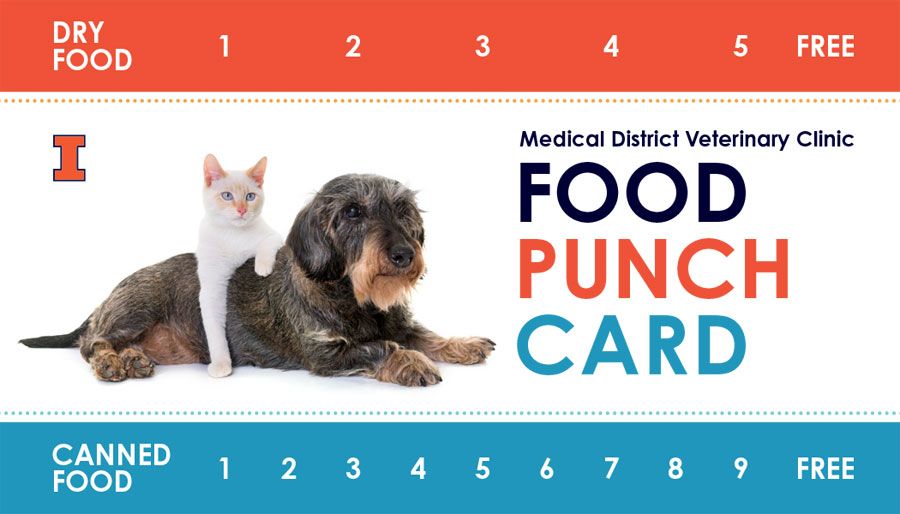
Buying prescription food through us also comes with a perk: our Food Punch Card. Every qualifying purchase gets you a punch, and once you’ve reached the required number, you’ll receive a free bag or case of food. It’s our way of saying thank you for trusting us with your pet’s nutrition and, over time, it can meaningfully offset the cost of a therapeutic diet.
The Bottom Line
Convenience matters, but so does having a team that knows your pet, stands behind what they sell, and works to keep prices fair. The next time you’re about to click “add to cart” on an online pet pharmacy, give us a call or ask at your next visit. We’ll check our pricing, walk you through your options, and make sure you and your pet are getting the best combination of value, safety, and support — all in one place.
—Ana Valbuena (she/her/ella), DVM
¿Por Qué Comprar los Medicamentos, el Alimento Recetado y los Productos de Prevención de su Mascota Directamente con Nosotros?
Si alguna vez se ha quedado en la fila de la caja preguntándose si es más económico ordenar en línea la prevención de gusano del corazón o la dieta recetada de su mascota, no está solo. Es una pregunta justa y una que respondemos con mucho gusto y honestidad. Aquí le explicamos por qué creemos que comprar directamente en Medical District Veterinary Clinic es casi siempre la mejor opción para usted y su mascota.
Revisamos Nuestros Precios — Regularmente
Sabemos que el precio importa, así que no simplemente lo fijamos y lo olvidamos. Revisamos con frecuencia nuestros precios en comparación con los principales minoristas en línea, como Chewy, para asegurarnos de mantenernos competitivos. En muchos casos, podemos igualar esos precios, y a veces incluso somos más económicos. Antes de agregar algo a un carrito en línea, vale la pena preguntarnos primero. ¡Podría sorprenderse!
Nosotros Conocemos a Su Mascota. Los Minoristas en Línea No.
Cuando ordena a través de nosotros, los medicamentos y el alimento recetado de su mascota provienen de alguien que realmente la ha examinado, ha revisado su expediente y entiende sus necesidades de salud específicas. Detectamos posibles interacciones entre medicamentos, monitoreamos efectos secundarios y nos aseguramos de que las dosis y las dietas sigan siendo apropiadas a medida que cambian las necesidades de su mascota. Un mercado en línea no puede hacer nada de esto.
También está el tema de la autenticidad y el almacenamiento adecuado. Los medicamentos recetados y las dietas terapéuticas deben manejarse correctamente desde el fabricante hasta el estante. Cuando compra con nosotros, usted sabe exactamente dónde ha estado el medicamento de su mascota en todo momento.
Igual de importante, nuestros medicamentos y productos cuentan con el respaldo completo del fabricante. Esto significa que si alguna vez surge una duda sobre la calidad del producto, una reacción o su eficacia, usted cuenta con el respaldo tanto de nosotros como de la compañía que lo fabrica. Los minoristas en línea no pueden ofrecer ese mismo nivel de responsabilidad. Si algo sale mal, muchas veces se queda solo/a lidiando con el servicio al cliente, sin nadie que realmente conozca el historial de su mascota.
Nuestra Tarjeta de Sellos de Alimento Premia la Lealtad
Comprar alimento recetado con nosotros también tiene un beneficio adicional: nuestra Tarjeta de Sellos de Alimento. Cada compra que califica le da un sello, y una vez que alcance el número requerido, recibirá una bolsa o caja de alimento gratis. Es nuestra manera de agradecerle por confiar en nosotros para la nutrición de su mascota, y con el tiempo, puede compensar significativamente el costo de una dieta terapéutica.
En Resumen
La conveniencia importa, pero también importa contar con un equipo que conoce a su mascota, respalda lo que vende y trabaja para mantener precios justos. La próxima vez que esté a punto de hacer clic en “agregar al carrito” en una farmacia veterinaria en línea, llámenos o pregúntenos en su próxima visita. Revisaremos nuestros precios, le explicaremos sus opciones, y nos aseguraremos de que usted y su mascota obtengan la mejor combinación de valor, seguridad y respaldo, todo en un solo lugar.
—Ana Valbuena (she/her/ella), DVM
Wait, Pets Need Dermatologists Too?

As your primary care veterinarians, we often have a lot of first-line tools and therapies to manage conditions that affect the skin, from allergies and ear infections to lumps and bumps, common types of skin infections, and metabolic conditions (like thyroid disease).
When these conditions are chronic, such as allergies and metabolic conditions, they can be super arduous for veterinarian, pet owner, and pet alike to manage. Nothing saddens me more than when a pet owner comes in and says their pet has been up all night itching, and in their distress, waking everyone else up!
One Thing Leads to Another
Allergies, in particular, can be very complex to control. Not only are there several different types (flea bite sensitivity, seasonal or environmental allergy, food allergies, etc.), but the allergies can also cause secondary problems, like ear or skin infections.
We typically recommend testing for and treating all secondary infections and treating the underlying allergy at the same time to get things under control. (Pro tip: Make sure you keep your pet on a monthly, year-round flea prevention, even if you don’t see any signs of fleas! It just takes one flea bite to send an immune system into a frenzy).
If you don’t control the underlying allergy, you will have difficulty resolving those secondary skin and ear infections, and they will be more persistent and recurrent. Allergies are a pain!
And if this weren’t complex enough, now throw in the factor of time and chronicity in trying to manage allergies, and things can get hard to manage really quickly.
Call in the Specialist
Here comes the good part. We have another tool! When we have tried these first-line workups and treatments and are still having trouble controlling itchiness or infections, we will often suggest seeing a specialist for all things skin, ears, and nails: a veterinary dermatologist.
Yes, pets have (and need!) dermatologists too. And guess what? You now have access to a veterinary dermatologist on site at the primary care clinic you know and love. No extra travelling to a new clinic required!
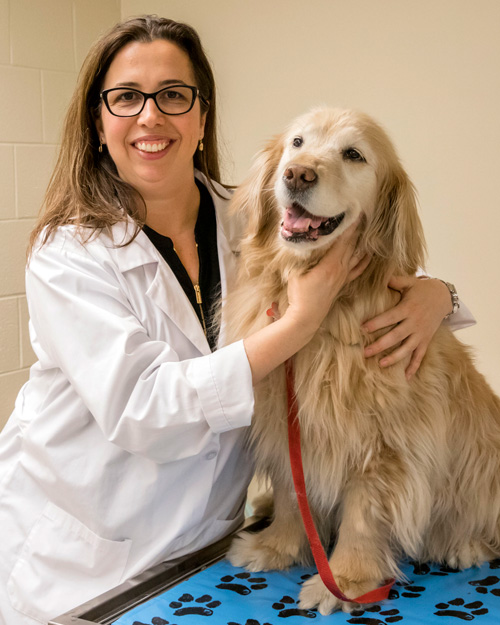
Dr. Clarissa Souza is one of the amazing veterinary dermatologists at the College of Veterinary Medicine Veterinary Teaching Hospital in Urbana. She sees patients at the Medical District Veterinary Clinic on a part-time schedule. And, just like having our cardiologists on site, having specialty dermatology expertise at our fingertips has really elevated the level of care we are able to provide for your pets.
As your primary veterinarians, we have your (and your pet’s) back for all your primary care needs. But when we get those chronic, complex cases and are feeling stuck, now we can get specialty-led answers sooner and pet comfort faster. We love directly collaborating with our specialists to advance the health of our patients. If you have a pet that has unusual lumps or bumps or has chronic skin, nail, or ear issues that have been hard to control, ask your primary care veterinarian if it is worth a trip to see Dr. Souza. (I bet it will be!)
— Amanda Hampton, DVM (she/her/hers)
Screwworm: Should Pet Parents Be Worried ?
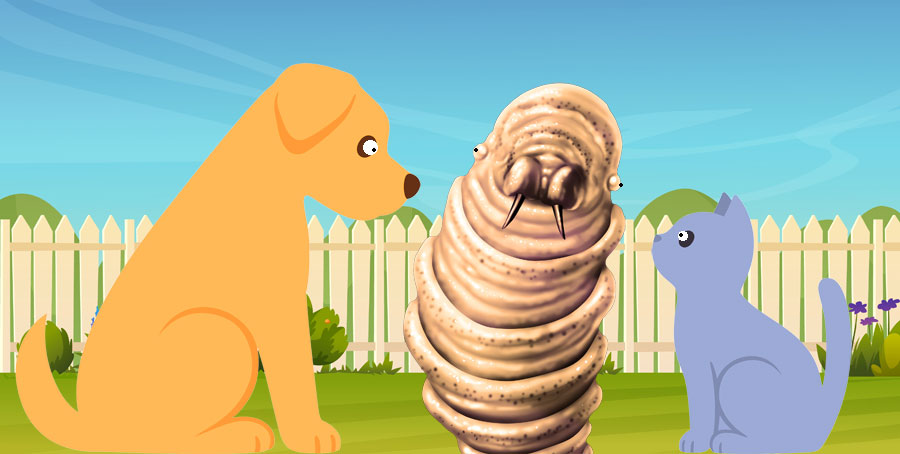
Screwworm is a flesh-eating parasitic maggot that can attack animals and, rarely, humans.
It is the larval maggot stage of a parasitic fly called the New World screwworm (scientific name: Cochliomyia hominivorax). Unlike other ordinary maggots that feed off dead tissue, screwworm larvae feed off living flesh, making it a serious agricultural and veterinary concern.
The U.S. eradicated screwworm in 1966 by releasing sterile male flies. Since female screwworms only mate once, mating with a sterile male produced no offspring. The species still exists in parts of South America but has been controlled with surveillance and sterile fly programs.
Recently, an outbreak has spread through Central America and Mexico, and several animal cases have been confirmed in Texas and New Mexico. No human cases have been reported.
How Does Screwworm Spread?
Screwworm is spread when an adult female fly lays eggs in an open wound or body opening such as the nose, ears, eyes, or mouth. The eggs then hatch into larvae, also known as maggots, which burrow into living tissue to feed. This can create a large and severe wound. If left untreated, it can cause serious injury, infection, and, in worst cases, death.
Cattle, sheep, goats, horses, and other livestock are the main animals affected. However, the larvae can also affect wildlife, pets such as dogs, and, in very rare cases, people. Although human infections are not common, there are higher risks for people who have open wounds and live in areas where screwworm flies are present.
What Are Symptoms/Signs in Pets?
Symptoms can include wounds that suddenly get larger and don’t heal, sensitivity around a wound/injury, swelling/redness/tenderness, bloody, malodorous discharge, visible maggots in a wound, excessive licking, scratching, or rubbing a wound, etc.
If left untreated, the infection can lead to lethargy, loss of appetite, or fever. The situation can become serious quickly because, as the larvae grow, they can destroy healthy tissue, creating deep pockets in the skin that can cause severe infection. In severe cases, the problem can quickly progress to shock or death over a few days if untreated.
What Does This Mean for Pet Parents?
If you see maggots in a wound on your pet and live in or have recently traveled through an affected area, seek veterinary care immediately. Prevent your pet from licking or scratching the wound, and do not attempt to treat at home.
Dogs with open wounds that travel through affected regions are at higher risk. For most dog owners in the United States, screwworm remains rare. However, veterinarians and animal health officials are especially alert because of recent detections in livestock and wildlife in the Southwest.
If you are concerned about a specific wound on your dog, please reach out to your veterinarian.
—Angélica Calderón, DVM
Qué es el Gusano Barrenador, por qué es Importante y Debería Preocuparme?
El gusano barrenador es una larva parásita que se alimenta de carne viva y puede afectar a animales, y en raras ocasiones a seres humanos. Se trata de la fase larvaria de una mosca parásita conocida como gusano barrenador del Nuevo Mundo (nombre científico: Cochliomyia hominivorax). La diferencia de otras larvas comunes que se alimentan de piel muerta es que las larvas del gusano barrenador consumen carne viva, lo que representa un grave problema para la agricultura y la medicina veterinaria.
Estados Unidos erradicó el gusano barrenador en 1966 mediante la liberación de moscas macho estériles. Dado que las hembras solo se aparean una vez, el apareamiento con un macho estéril no produce descendencia. La especie aún persiste en algunas zonas de Sudamérica, pero se ha logrado controlar gracias a programas de vigilancia y liberación de moscas estériles.
Recientemente, se ha propagado un brote por Centroamérica y México, y se han confirmado varios casos en animales en Texas y Nuevo México. No se han registrado casos en humanos.
Cómo se Propaga el Gusano Barrenador?
El gusano barrenador se propaga cuando una mosca hembra adulta deposita huevos en una herida abierta o en una abertura corporal, como la nariz, los oídos, los ojos o la boca. Posteriormente, los huevos eclosionan y dan lugar a larvas conocidas comúnmente como gusanos, las cuales penetran la piel viva para alimentarse. Esto puede generar una herida extensa y grave. Si no se trata, puede provocar lesiones serias, infecciones y, en los casos más graves, la muerte.
El ganado vacuno, ovino, caprino y equino, así como otros animales de granja, son los principales afectados; sin embargo, la plaga también puede afectar a mascotas como los perros, a la fauna silvestre y, en casos muy poco frecuentes, a los seres humanos. Aunque las infecciones en humanos no son habituales, existe un mayor riesgo para aquellas personas que presentan heridas abiertas y se encuentran en zonas donde está presente la mosca del gusano barrenador.
Cuáles Son los Síntomas en las Mascotas?
Los síntomas pueden incluir heridas que aumentan de tamaño repentinamente y no cicatrizan, sensibilidad alrededor de la herida o lesión, hinchazón, enrojecimiento o dolor, secreción sanguinolenta y maloliente, presencia visible de larvas en la herida, así como lamido, rascado o frotamiento excesivo de la zona afectada, entre otros. Si no se trata, esto puede provocar letargo, pérdida de apetito o fiebre. La situación puede agravarse rápidamente, ya que a medida que las larvas crecen, destruyen el tejido sano y crean cavidades profundas en la piel que pueden derivar en infecciones graves. En casos extremos, la falta de tratamiento puede conducir a un estado de shock o a la muerte, progresando con rapidez en cuestión de pocos días.
Qué Significa Esto para los Dueños de Mascotas?
Si observa larvas en una herida y vive en una zona afectada o ha viajado recientemente por ella, busque atención veterinaria de inmediato. Evite que su mascota se lama o se rasque la herida y no intente tratarla en casa. Los perros con heridas abiertas que viajan por regiones afectadas corren un mayor riesgo. Para la mayoría de los dueños de perros en Estados Unidos, el gusano barrenador sigue siendo poco frecuente, sin embargo los veterinarios y las autoridades de sanidad animal se mantienen especialmente alerta debido a detecciones recientes en ganado y fauna silvestre en el suroeste del país.
Si le preocupa alguna herida específica en su perro, por favor consulte a veterinario.
—Angélica Calderón, DVM
Sources of Information/Fuentes de Información
https://www.cdc.gov/new-world-screwworm/about/index.html
https://www.aphis.usda.gov/livestock-poultry-disease/cattle/ticks/screwworm
https://www.avma.org/news/additional-screwworm-cases-confirmed-texas-livestock-new-mexico-dog
How Do You Know What to Feed Your Dog?
As a veterinarian, I get asked quite a few questions, and a handful of them are in competition for the title of “least favorite question.”
What’s the best breed of dog? Why does tick prevention cost more than heartworm prevention? Do I really need that vaccine? Can you look at my dog’s poop? (This one is often accompanied by a photo.) Can you smell this?
And the one I get asked the most: What’s the best food that I can feed my dog?
For most of these questions there is no simple answer, but the one about the best diet may be the hardest to answer. There are so many pet food options and so little regulation of how pet food companies can make and market their diets.
So, what can you trust?
We at Medical District Veterinary Clinic want to facilitate our clients picking a diet that works for their pets and their family as a whole. That means we understand that the cost, type, and how often you feed your pet varies by family. With so many choices available, we often rely on AAFCO standards to know if the diet you select for your pet is adequate.
Who or What Is AAFCO?
AAFCO (which stands for Association of American Feed Control Officials) is a non-profit organization that has been guiding government officials for over 100 years in determining nutritional standards for all pet foods.
Here is their mission statement: AAFCO is a collaborative association that supports members and stakeholders and promotes a safe feed supply through unified system-based regulation, feed ingredients standards, and laboratory operations.
This organization ensures that a diet has the essential nutrients for your pet, with different standards for all types and life stages of pets. That means the AAFCO label will tell you what kind of animal this diet is appropriate for, from a growing puppy to a senior cat.
With the ever-growing number of pet food options out there, you can rely on these standards to know whether the food that you picked for your pet will have the nutrients they need. If the diet you picked for your pup has the AAFCO label, then you won’t hear many concerns from me.
So, you may be asking yourself, what has Dr. Kritzman fed her dog? Well, Miss Emerald Brown Aria Stark Kritzman has been on everything from Iams to Kirkland to Hills Prescription Renal Diet, and now Purina Bright Minds for Senior Dogs, as she enters her twelfth year. (Not including the countless meals from my children that she’s gotten through counter surfing.)
— Dr. Alyssa Kritzman
Why Tooth Extractions May Be Necessary for Your Pet

When we think about our pets’ health, dental care is often overlooked. However, it plays a critical role in their overall well-being. While the idea of a tooth extraction can sound alarming, it’s sometimes the best and most compassionate option to relieve pain and protect your pet’s health.
Why Would a Tooth Need to Be Extracted?
Veterinarians always aim to preserve teeth whenever possible. However, when a tooth becomes severely damaged or diseased, extraction may be the most effective way to restore comfort and prevent further complications.
Removing a diseased tooth provides several important benefits:
- Eliminates chronic pain that pets often silently endure
- Stops active infections in the mouth
- Prevents harmful bacteria from spreading through the bloodstream to vital organs such as the heart, liver, and kidneys
Left untreated, dental disease can impact far more than just your pet’s mouth; it can affect their entire body.
Common Reasons for Tooth Extractions
There are several conditions that may make extraction necessary:
Severe Periodontal Disease (Bone Loss)
This is one of the most common causes of tooth loss in pets. Periodontal disease occurs when plaque and tartar build up, leading to infection and inflammation of the tissues that support the teeth. Over time, this can destroy the bone holding the tooth in place. When significant bone loss occurs, the tooth becomes unstable and painful, making extraction the best option.
Fractured Teeth with Exposed Pulp
Broken teeth are not just cosmetic issues; they can be extremely painful. When the pulp (the inner part of the tooth containing nerves and blood vessels) is exposed, it leaves the tooth vulnerable to infection. In many cases, extraction is necessary to relieve pain and prevent abscess formation.
Retained Baby Teeth
Sometimes, baby teeth don’t fall out as they should and remain in place alongside adult teeth. These retained teeth can trap food and bacteria, increasing the risk of periodontal disease and misalignment. Removing them early helps maintain proper oral health.
Feline Tooth Resorption
Cats are especially prone to a condition called tooth resorption, where the tooth structure begins to break down from within. This process is painful and progressive, often requiring extraction of the affected teeth to provide relief.
Pets Often Hide Dental Pain
One of the most challenging aspects of dental disease is that pets are very good at hiding pain. Many animals will continue to eat normally even when they have significant oral discomfort. You may not notice any changes in eating habits, which can make dental issues easy to miss.
Subtle signs can include:
- Drooling
- Bad breath
- Pawing at the mouth
- Behavioral changes
However, in many cases, there are no obvious signs at all.This makes regular veterinary exams essential.
How Veterinarians Decide Which Teeth Need Extraction
Determining whether a tooth should be extracted involves a thorough and careful process. During a dental procedure, your veterinarian will:
- Perform a comprehensive oral exam while the pet is under anesthesia
- Use a dental probe to assess gum health and attachment
- Take full-mouth dental X-rays to evaluate the roots and surrounding bone
Dental X-rays are especially important because much of the disease occurs below the gumline, where it cannot be seen with the naked eye. This allows veterinarians to make informed decisions about which teeth can be saved and which are causing pain or infection.
Preventing the Need for Extractions
While some dental issues are unavoidable, many extractions can be prevented with proactive care. Consistent dental care at home is one of the most effective ways to protect your pet’s teeth and gums.
Tooth Brushing Tips
Brushing your pet’s teeth is the gold standard for preventing plaque and tartar buildup. Here’s how to make it easier:
- Start slowly and be patient: Let your pet get used to having their mouth handled before introducing a toothbrush
- Use pet-safe toothpaste: Never use human toothpaste. Pet toothpaste is flavored and safe to swallow
- Choose the right tools: A soft-bristled toothbrush or finger brush designed for pets works best
- Focus on the outer surfaces when first starting: Most plaque accumulates on the outside of the teeth, especially along the gumline. Once your pet is used to having their teeth brushed, you can add in the inner surfaces
- Use gentle, circular motions: You don’t need to scrub hard as gentle brushing is still effective
- Keep sessions short and positive: You can separate your pet’s mouth into four quadrants and reward your pet with their favorite treat after each quadrant is brushed to build a positive association. Aim to brush each quadrant for 30 seconds
- Aim for daily brushing: Consistency matters more than perfection
Additional At-Home Support
- Veterinary-approved dental chews or diets can help reduce plaque
- VOHC approved dental rinses or water additives may also be helpful
- Regularly checking your pet’s mouth for redness, odor, or buildup can help catch problems early
Routine COHATs (Comprehensive Oral Health Assessments and Treatments)
Professional dental cleanings, also known as COHATs, are a cornerstone of your pet’s oral health care. These procedures allow veterinarians to fully assess and treat dental disease in a safe, thorough, and effective way.
A COHAT includes:
- A complete oral examination
- Scaling and polishing of teeth (both above and below the gumline)
- Full-mouth dental X-rays
- Treatment of any identified dental issues
COHATs are best performed under anesthesia. Anesthesia ensures your pet remains still and comfortable, allowing the veterinary team to clean beneath the gumline where the most harmful bacteria reside and to take accurate dental X-rays. Intubation also protects your pet’s airway from water and debris during the procedure.
It’s important to note that anesthesia-free dental cleanings are not recommended. While they may appear less invasive, they only address the visible surfaces of the teeth and do not treat disease below the gumline. Additionally, these procedures typically do not include polishing, which is a critical step after scaling. Without polishing, microscopic defects and rough areas are left on the tooth surface, creating an ideal environment for bacteria to adhere and multiply more quickly. This can accelerate plaque and tartar buildup. Attempting to clean teeth on an awake pet can also lead to stress, incomplete care, and even damage to the teeth or surrounding tissues.
Routine COHATs, combined with at-home dental care, are the most effective way to prevent dental disease and reduce the likelihood of needing extractions in the future.
The Bottom Line
Tooth extractions are never the first choice, but when they are needed, they can dramatically improve your pet’s comfort and quality of life. By addressing dental disease early and maintaining consistent oral care, you can help keep your pet healthy, happy, and pain-free for years to come.
– Dr. Jeanette Barragan
Kitten Season Is Coming
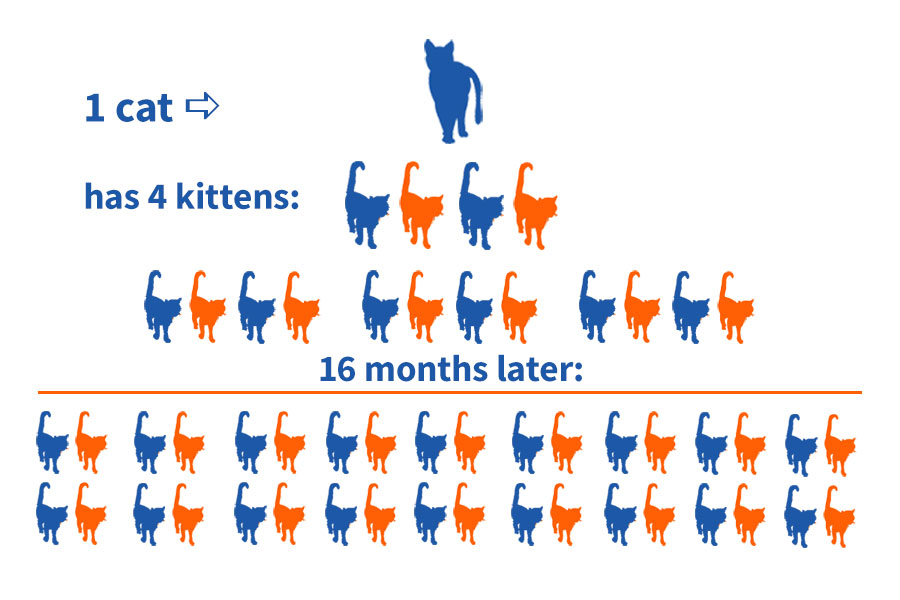
Every spring in Chicago, as soon as the weather shifts, we enter kitten season. And every year, we see the impact of unspayed and unneutered outdoor cats.
If you are feeding outdoor cats in your neighborhood, you are already doing something incredible and compassionate. One important next step to strongly consider is spaying and neutering. It is the single most effective way to prevent suffering and overpopulation.
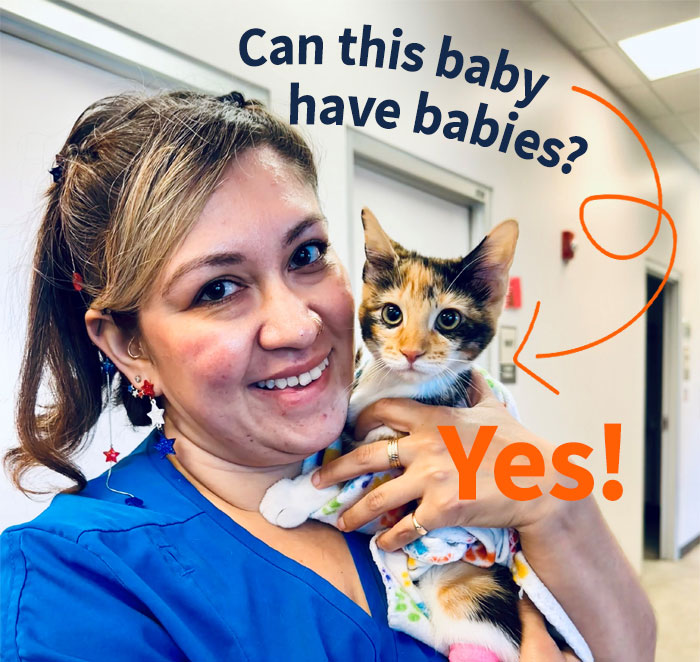
Cats can become pregnant as early as 4 to 5 months of age and can have multiple litters in one season. One intact female can quickly lead to dozens of kittens. See the chart above to see how quickly one unsprayed cat can multiply! Many of those kittens will face illness, parasites, trauma, and limited access to care.
Spaying prevents life-threatening uterine infections and certain cancers. Neutering reduces fighting, roaming, spraying, and the spread of diseases like FIV. In community cats, Trap Neuter Return programs help stabilize colonies over time. If you notice a tipped ear, that cat has already been sterilized.
If you are caring for outdoor cats and are unsure what your options are, we can help. At Medical District Veterinary Clinic, we are happy to discuss spay and neuter services and connect you with local resources.
Spring is coming. This is the time to plan ahead.
— Ana Valbuena (she/her/ella), DVM
La Temporada de Gatitos Está por Llegar
Cada la primavera en Chicago, en cuanto cambia el clima, entramos en la temporada de gatitos. Y cada año vemos el impacto de los gatos que no están esterilizados y viven al aire libre.
Si estás alimentando gatos en tu vecindario, ya estás haciendo algo increíble y compasivo. Un paso muy importante que debes considerar seriamente es esterilizarlos. Es la manera más efectiva de prevenir el sufrimiento y la sobrepoblación.
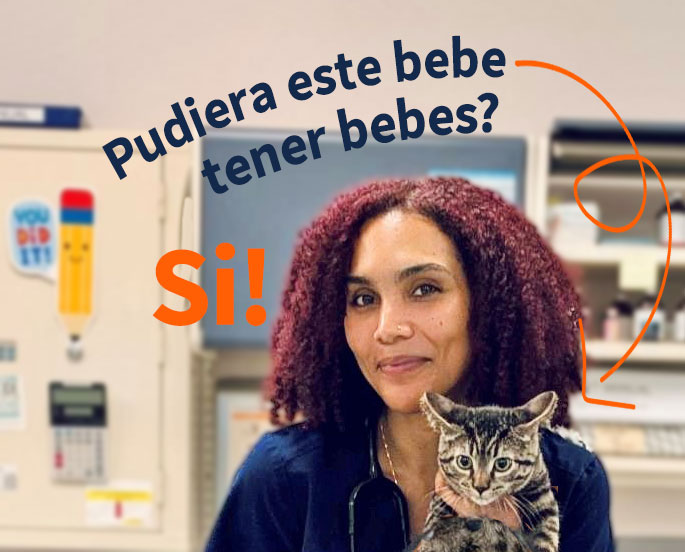
Las gatas pueden quedar embarazadas desde los 4 a 5 meses de edad y pueden tener varias camadas en una sola temporada. Una sola hembra sin esterilizar puede resultar rápidamente en decenas de gatitos. Mira la gráfica encima para ver qué tan rápido puede multiplicarse una sola gata sin esterilizar. Muchos de esos gatitos enfrentarán enfermedades, parásitos, traumas y acceso limitado a atención veterinaria.
La esterilización previene infecciones uterinas que ponen en riesgo la vida y ciertos tipos de cáncer. La castración reduce peleas, escapadas, marcaje con orina y la transmisión de enfermedades como el FIV. En gatos comunitarios, los programas de Atrapar, Esterilizar y Regresar ayudan a estabilizar las colonias con el tiempo. Si notas que un gato tiene la punta de la oreja recortada, significa que ya fue esterilizado.
Si estás cuidando gatos afuera y no sabes cuáles son tus opciones, podemos ayudarte. En Medical District Veterinary Clinic estamos disponibles para hablar sobre servicios de esterilización y conectarte con recursos locales.
La primavera ya viene. Es el momento de planear con anticipación.
— Ana Valbuena (she/her/ella), DVM
Let’s Have a Heart to Heart
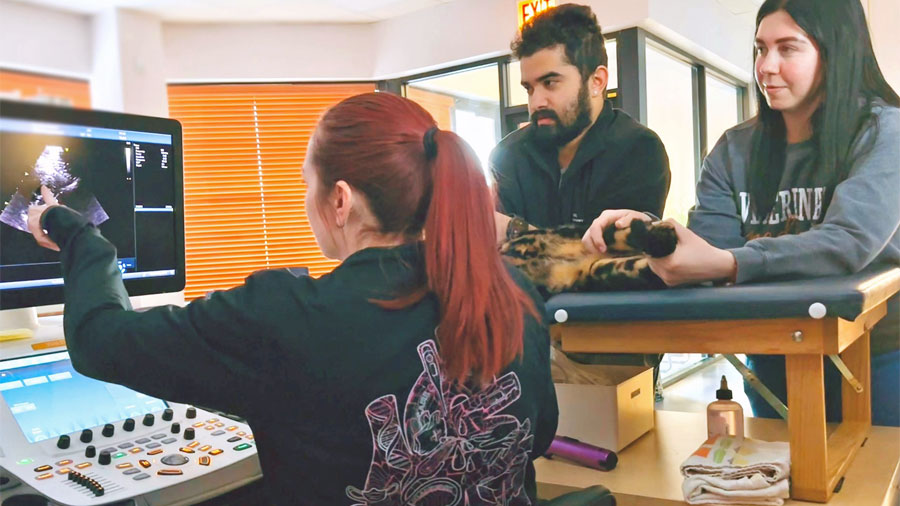
Introducing Specialty Veterinary Cardiology Services at Our Primary Care Clinic
This month, love is in the air, and we’re celebrating the hearts that matter most—the ones inside your beloved pets. We’re excited to announce that our clinic now offers veterinary cardiology specialty services, including echocardiography (heart ultrasound), provided by a board-certified veterinary cardiologist, right here in the clinic you already know and trust.
What Is a Veterinary Cardiologist?
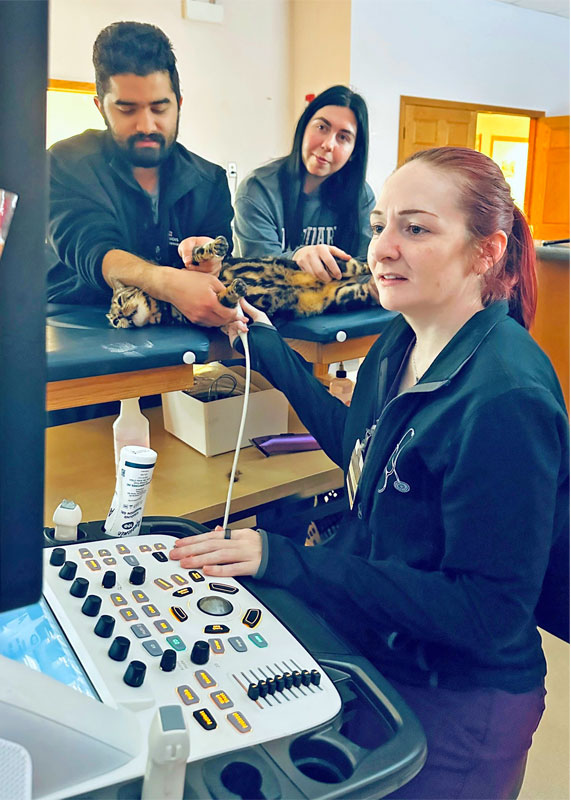
A veterinary cardiologist is a veterinarian with advanced specialty training focused entirely on heart disease. They partner closely with us as your primary care veterinarians to diagnose, monitor, and manage heart conditions—whether your pet is in the early stages of life or enjoying their golden years.
By bringing cardiology services into our primary care setting, we get the best of both worlds: specialist-level expertise paired with the personalized primary care your pet already receives.
An Echocardiogram: A Big Window into Your Pet’s Heart
An echocardiogram is a noninvasive ultrasound that lets us see the heart in motion—how the chambers fill, how the valves open and close, and how effectively the heart pumps blood.
It’s painless, typically does not require sedation, and provides a lot of information that cannot be obtained from X-rays or physical exams alone. It is one of the best ways for diagnosing most forms of heart disease and determining and evaluating what cardiac medications your pet needs. It also gives us clues on anesthetic safety and whether certain sedatives can be used for procedures.
Echocardiography can help diagnose and monitor many cardiac conditions, including:
- Heart murmurs – A heart murmur is an extra whooshing sound heard when the heart is auscultated. An echocardiogram can sort out innocent murmurs (a harmless sound) from true heart disease
- Degenerative (valvular) heart disease – Common in older, small- and medium-breed dogs
- Dilated cardiomyopathy (DCM) – Often seen in large-breed dogs
- Hypertrophic cardiomyopathy (HCM) – The most common heart disease in cats
- Congenital heart defects – Such as PDA or valve abnormalities
- Arrhythmias (abnormal heart rhythms) – When evaluated alongside ECG findings
- Pericardial disease – Fluid around the heart
- Pulmonary hypertension – Increased pressure in the lungs affecting heart function
Why We Love Offering Cardiology Care
From a primary care veterinarian’s perspective, having a specialist work directly within our clinic is truly special and not something we get the advantage of having every day.
A strong heart team: As your primary care veterinarian, we know your pet. Working hand-in-hand with an on-site cardiologist deepens our knowledge of your pet’s health, helps take guesswork out of complex cardiac cases, and allows for stronger decision making recommendations when it comes to things like anesthesia, surgery, and fluid therapy. That teamwork leads to unified treatment plans, better outcomes and fewer complications.
Less stress, more comfort: Vet visits can be stressful for pets and their owners alike. Receiving specialty care in a familiar environment helps pets (and you) feel more at ease.
Faster answers, better continuity: Because cardiology services are available right here, we can remove the specialty bottleneck and move from concern to diagnosis to treatment without unnecessary delays. And with more data on your pet, we can more specifically target treatment plans to your pet’s needs, sooner, and with more confidence.
Expert care with a personal touch: Our cardiologist collaborates closely with our primary care veterinarians to create treatment plans that are effective, realistic, and aligned with your goals for your pet’s health. The streamlined process means you get personalized answers, faster. We love having cardiology right at our fingertips!
When a Cardio Consult Could Help
Your veterinarian may recommend a cardiology evaluation if your pet has:
- A newly detected heart murmur
- Coughing, exercise intolerance, or breathing changes
- Weakness or fainting episodes
- Known heart disease needing monitoring
- Breed-related risk for heart conditions
- Abnormal findings on X-rays or lab work
- A known heart condition and needs an evaluation before an upcoming anesthetic or surgical procedure
You love your pet, and we do too! And now, advanced heart care doesn’t have to mean leaving the clinic you trust. With specialized veterinary cardiology services and primary care all under one roof, your pet can receive expert cardiac care in a place that already feels like home. Don’t hesitate to ask us if a cardiology consult is right for your pet!
— Amanda Hampton, DVM (she/her/hers)
Pet Allergies: From Head Shakers to Bottom Scooters

When your allergic pet gnaws on her haunch or licks his feet incessantly, the habit might annoy you just as much as it does the pet. Some furry friends go their entire lives without suffering from allergies. But those of us who have had pets with allergies know the problem can take a big toll on quality of life.
Dr. Stephanie Bruner is a veterinary dermatologist at the University of Illinois College of Veterinary Medicine. She sees patients at the Veterinary Teaching Hospital and offers insights into what’s going on with all that scratching and shaking.
Dermatology Services at Medical District Vet Clinic
Since November 2025, Dr. Clarissa Souza, a boarded dermatologist from the University of Illinois Veterinary Teaching Hospital, has offered appointments on a part-time basis at the Medical District Veterinary Clinic in Chicago. She diagnoses and treats allergies, skin infections, ear diseases, hair loss, nail and nail bed diseases, itching/scratching/biting, and more.
Please call 312-226-2588 to schedule a dermtology appointment for your pet.
What Are Allergies?
“Allergies occur when the patient’s immune system experiences an over-the-top response to any of a wide variety of triggers,” Dr. Bruner explains. “Offending stimuli may range from fleas, foods, pollens, and mold spores to dust mites or even medications. The result is an adverse reaction somewhere in the body.”
Currently, science does not have an answer for why allergies occur in one individual but not another. However, we do know that certain breeds are more susceptible to allergies.
“Genetics plays a role,” Dr. Bruner says. “Various breeds of retrievers, spaniels, and terriers, to name a few, are at a higher risk of developing clinical signs associated with environmental allergens.”
Other factors besides genetics include geography, seasonal fluctuations in pollen counts, the animal’s indoor and outdoor habits, air quality, diet, and the health of the patient’s skin barriers.
“This exceedingly lengthy list explains, at least in part, why no two allergy patients can be treated the same way,” says Dr. Bruner. For this reason, veterinary dermatologists must take a tailored approach to treating each allergy patient.
Allergy Symptoms
In humans, allergies tend to manifest as itchy eyes, sneezing, or runny noses. They can appear as rashes or even result in inflammation and difficulty breathing. In dogs and cats, however, allergies trend toward a different list of symptoms entirely.
In dogs, symptoms include scratching, licking, and rubbing in areas such as the ears, face, feet, belly, and rear end.
“I refer to these as my ‘Big Five’ patients,” Dr. Bruner explains. “These are the head shakers, face rubbers, foot lickers, belly scratchers, and bottom scooters.” Other signs include ear or skin infections that just keep coming back, no matter how often you treat them.
Our feline friends are better at hiding symptoms, and therefore cat allergies tend to look more like excessive grooming. “Cat allergies can also become more obvious if itchy crusts develop on the skin or large areas of swelling arise, possibly resembling ulcers or growths,” says Dr. Bruner.
Identifying the Allergy Culprit
When diagnosing an animal with allergies, veterinarians start by determining what is not causing the reaction.
“First, allergies are diagnosed by ruling out other disorders that can mimic them, such as external parasites, fungal infections, or autoimmune disorders,” Dr. Bruner explains. “Then, the real work begins.”
Pets, like people, suffer from many different types of allergies, such as environmental allergies and food allergies. The first type of allergy to rule out is flea allergy dermatitis.
“Flea allergy dermatitis patients are not typically horribly infested with fleas, but a small number of fleas can cause big problems,” says Dr. Bruner. “Routine flea prevention, prescribed by a veterinarian, can be a real game changer.”
If fleas aren’t to blame, then doctors move on to environmental allergies. “In this case, the patient’s medical history can help answer this question. For example, a dog that only scratches and experiences ear infections in the summer is less likely to be reactive to foods.”
For those patients who do not have a seasonal aspect to their allergy symptoms, a diet trial is the next step. “A highly restricted diet trial, using a prescription-grade food under the guidance of a veterinarian, may be the next diagnostic test performed,” Dr. Bruner states.
During the diet trial, which lasts at least eight weeks, the pet cannot have any treats, table food, or dog food other than the special diet food prescribed. “If the patient does not improve by the end of the trial, environmental allergens are likely to be at fault.”
Finding Relief from Allergies
For those pets with food allergies, treatment means staying away from the foods that have been found to cause the reaction. For those with environmental allergies, treatments can range from medicated shampoos, sprays, lotions, and wipes to oral medications or injections.
Dr. Bruner adds, “Most patients will achieve their best outcomes when a veterinarian or veterinary dermatologist works with the whole family and puts together a highly personalized care plan that includes several of these treatment modalities to attack the problem from multiple angles.”
Unfortunately, no “cure” for pet allergies exists. Treatments are meant to ease symptoms so the patient can be more comfortable throughout the rest of their life. “My goal as a veterinary dermatologist is to develop a safe and effective care plan for every allergy sufferer. The plan should be sustainable—both in terms of time and financial investment—for their humans,” Dr. Bruner explains. “Perhaps the best thing that pet owners can do is be aware of the possible early signs of allergies—remember the Big Five!—and consult with a veterinarian before secondary ear and skin infections take the problem to the next level.”
’Tis the Season for Pet Allergies

Pets may be plagued with allergies at any time of the year, according to Dr. Jennifer Clegg, a veterinarian who is completing a residency in dermatology at the University of Illinois Veterinary Teaching Hospital in Urbana. If you suspect allergies are bugging your pet, Dr. Clegg recommends that you see your local veterinarian.
What are the signs that your pet may have an allergy?
“Licking and chewing paws or limbs, scratching ears, shaking the head or face, rubbing the body on rugs or carpets or furniture, and rubbing the hind end on rugs or carpets are all common signs of allergies,” says Dr. Clegg. “You may notice that the excessive licking or scratching has led to hair loss, or even that your pet is pulling out its hair, which happens mainly in cats.”
Dermatology Services at Medical District Vet Clinic
Since November 2025, Dr. Clarissa Souza, a boarded dermatologist from the University of Illinois Veterinary Teaching Hospital, has offered appointments on a part-time basis at the Medical District Veterinary Clinic in Chicago. She diagnoses and treats allergies, skin infections, ear diseases, hair loss, nail and nail bed diseases, itching/scratching/biting, and more.
Please call 312-226-2588 to schedule a dermtology appointment for your pet.
Narrowing the Diagnosis
Your veterinarian will eliminate the most common possible allergies first. Parasites that live outside the body, such as fleas and mites, frequently cause allergies in pets. A flea and tick preventive medication prescribed by your veterinarian should stop this problem. However, if this medication does not get rid of the itchiness, the next step is to consider whether your pet’s food is the cause.
“Some allergies arise when the pet develops hypersensitivity to the protein in their diet,” explains Dr. Clegg. “In these cases, we implement a diet trial, replacing the protein source in the diet with either a prescription hydrolyzed protein diet or a novel protein diet for 8 to 12 weeks.
“By the end of the diet trial, the pet should be symptom free if the protein was the culprit. If the previous diet is then restored and the symptoms return, a food allergy diagnosis is confirmed.”
A successful diet trial requires strict adherence by pet and client. No flavored medications, supplements, toothpastes, snacks, or other food should be given during the trial period.
“Even oral heartworm or flea and tick preventatives must be avoided and a topical product used instead while the pet is on the diet trial,” says Dr. Clegg.
If the diet trial doesn’t eliminate the allergy symptoms, then the pet probably has an environmental allergy.
Outdoor Vs. Indoor Allergens
Unfortunately, in most cases the source of an environmental allergy cannot be eliminated. After all, Dr. Clegg says, “You can’t remove all your trees from your yard or remove all your neighbor’s trees.”
In these cases, the pet’s symptoms must be managed instead. Outdoor allergens vary with the season, if you live in a part of the world that goes through seasonal changes.
Both dogs and cats suffer from springtime allergies, most commonly when trees begin to pollinate. (Although cats are mainly indoor, pollen from trees is in the air and can enter the home.)
In the summer, the main pollen comes from grasses. “Kentucky blue, timothy, orchard, and rye grasses commonly contribute to grass pollen allergies in the Midwest,” notes Dr. Clegg. “And in central Illinois, corn pollen presents a problem for allergic pets during harvest time.”
During fall, weed pollination and ragweed are the main sources of allergens. Additionally, mold spores tend to rise in the fall due to falling leaves and dying plants. Molds thrive on decomposing plant matter and their spores can float in the air.
“For some pets, wiping the paws clean after they come inside may help, but this alone will not be curative,” she says. “However, veterinarians have a variety of prescription medications at their disposal to help manage allergy symptoms. Treatment is tailored to the individual pet.”
Winter typically puts an end to outdoor environmental allergens, but mold spores may continue to be an issue. Indoor environmental allergens are a problem year-round. Veterinarians most commonly see allergies to dust or storage mites.
“Unfortunately, even if you vacuum your house every day and are the most immaculate housekeeper on earth, you will never entirely rid your house of dust mites,” says Dr. Clegg.
Parting Advice
So, what can you do for your itchy pet with an environmental allergy?
Dr. Clegg recommends keeping your pet on year-round flea and tick preventatives. “Even just one flea bite can exacerbate allergy symptoms,” she says.
She also advises against giving over-the-counter medication to pets without a veterinarian’s approval. Over-the-counter antihistamines may not be effective on allergic pets, and certain decongestants can be toxic to pets.
Because most environmental allergens cannot be avoided, the best way to keep allergic pets comfortable is to stay in close communication with your local veterinarian.